
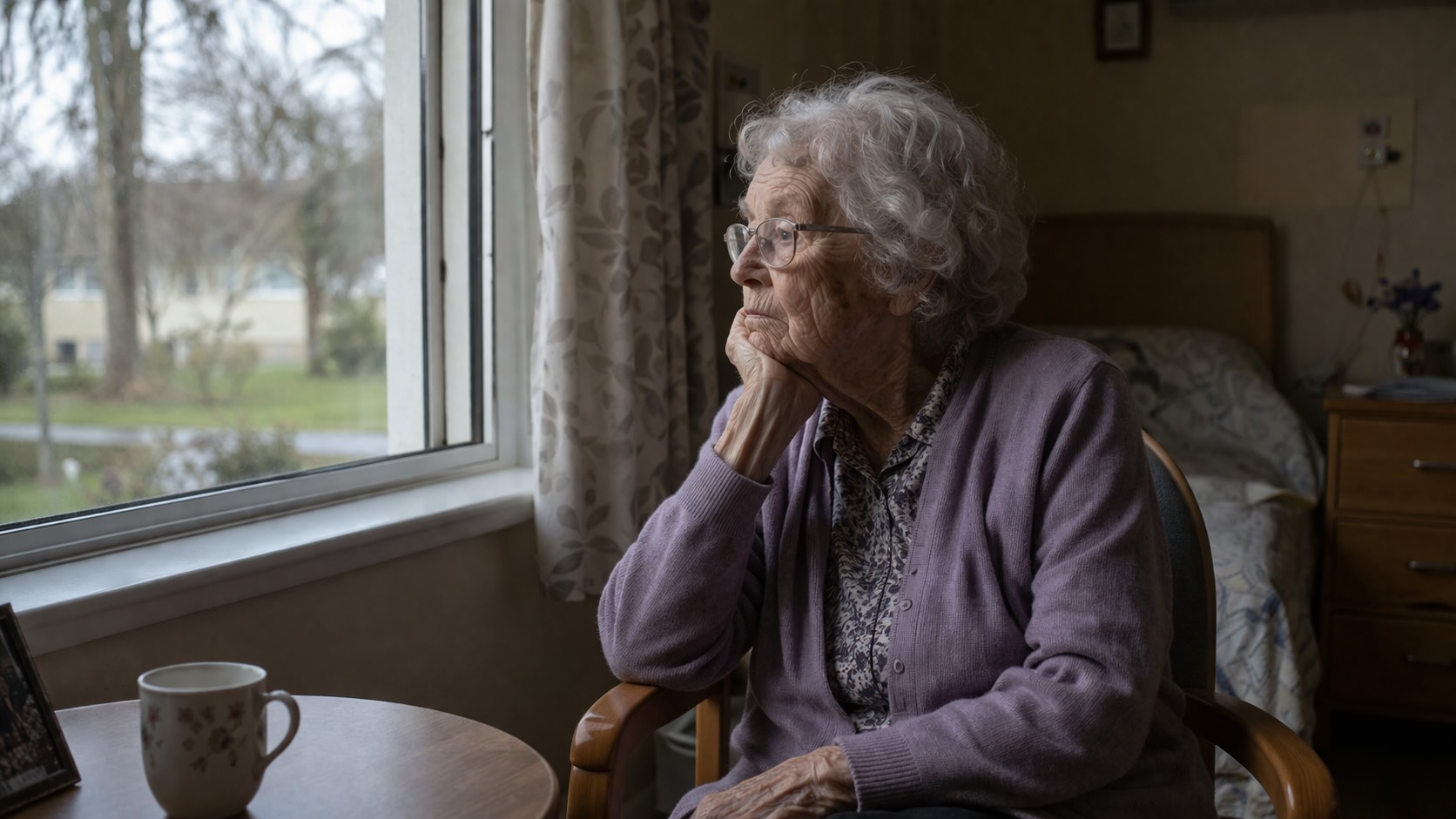

It’s one of the hardest decisions a family can face.
Your parent is getting older. They’re struggling to manage alone. Maybe they’ve had a fall. Maybe their memory is slipping. Maybe you’re exhausted from trying to help while juggling work, children, and your own health.
Someone suggests a care home. It seems like the sensible option. After all, professionals can provide round-the-clock support. Your parent will be safe. You’ll get your life back.
But something doesn’t sit right. A quiet voice whispers: Is this what I’m supposed to do? Is this honouring my parent — or abandoning them?
If you’re wrestling with this question, you’re not alone. Millions of families face it every year. And the answer matters more than most people realise — not just for your parent’s wellbeing, but for your own soul.
Let’s look honestly at what drives these decisions, what care homes are really like, what Scripture says about our responsibility, and what alternatives exist for families who want to do the right thing.
The Western Care Home Culture
In countries like the United Kingdom, United States, Canada, and Australia, care homes have become the default solution for aging parents. The assumption runs deep: when parents get old, they go into a home. It’s just what people do.
Consider the numbers. In the UK alone, approximately 400,000 people live in care homes. In the United States, that figure exceeds 1.3 million in nursing homes, with millions more in assisted living facilities. These numbers continue to grow as populations age.
But this wasn’t always normal. Throughout most of human history — and still today in much of the world — families cared for their elderly at home. Children, grandchildren, and extended relatives shared the responsibility. Aging parents remained part of the household until death.
So what changed?
The Shift Away from Family Care
Several factors drove this cultural shift:
Smaller families. With fewer children per household, there are fewer people to share caregiving duties. A single child may feel overwhelmed by what previous generations divided among many siblings.
Geographic mobility. Families no longer stay rooted in one place. Children move away for education and careers, while parents age alone, hundreds of miles from their nearest relative.
Dual-income households. When both spouses work full-time, there’s no one home during the day to care for an elderly parent. Previous generations often had a family member available to provide daily support.
Individualism. Western culture prizes independence and self-sufficiency. We’re taught to build our own lives, pursue our own happiness, and avoid being “burdened” by others. Consequently, caring for aging parents conflicts with this mindset.
Medical framing. Aging has been medicalised. We treat it as a condition requiring professional intervention rather than a natural stage of life that families navigate together.
Government provision. Welfare systems and care home industries have grown to fill the gap left by retreating families. When the state provides, families feel less obligated.
None of these factors are inherently evil. However, together they’ve created a culture where placing parents in care homes feels normal — even virtuous. We tell ourselves it’s “for their own good” or “what they would want.”
But is it?
The Real Reasons People Choose Care Homes
The comfortable answers are “best possible care” and “trained professionals.” But let’s be brutally honest about what often drives these decisions.
Convenience Over Sacrifice
Caring for an aging parent is inconvenient. It disrupts schedules, careers, social lives, and plans. A care home removes this disruption. Someone else handles the daily demands while we continue with life as normal.
We dress this up in caring language: “They’ll have company.” “There are activities.” “Staff are available 24/7.” But often the real motivation is simpler: we don’t want our lives interrupted.
The Inheritance Factor
Here’s what few people say out loud: many families want the house.
While a parent lives at home, the house isn’t liquid. It can’t be sold or divided. But once a parent enters a care home — or dies — the property becomes available.
I’ve seen this firsthand. I worked in a private care home that cost thousands per week. You’d assume families paying that much truly cared about their parents’ wellbeing. Some did. Many didn’t.
One story still haunts me.
A family placed their father in the home and told him he was on a cruise ship. Every single day, this man would ask when they were leaving port. He’d ask if he could speak to the captain. He genuinely believed he was on holiday.
Why the elaborate lie? Because his children wanted to sell his house. They couldn’t do that while he expected to go home. So they created a fiction that kept him calm and compliant while they emptied his life’s work into their bank accounts.
That man wasn’t suffering from severe dementia. He wasn’t a danger to himself. He didn’t require round-the-clock medical intervention. He was simply old — and in the way.
His children visited rarely. They’d collected what they wanted. The “cruise” story let them sleep at night.
I wish I could say this was unusual. It wasn’t.
Brainwashing About “Best Possible Care”
The care home industry spends millions on marketing. Glossy brochures show smiling residents in beautiful gardens. Staff are described as “dedicated professionals.” Facilities promise “person-centred care” and “home-from-home environments.”
Families absorb this messaging and genuinely believe they’re doing the right thing. They’ve been told — by care home salespeople, by social workers, by a culture that normalises institutionalisation — that professionals provide better care than families can.
For most situations, it’s simply not true.
A family member who loves you will always outperform a minimum-wage worker managing fifteen residents. Love notices things that checklists miss. Love provides dignity that institutions struggle to preserve. Love stays when shifts end.
But the brainwashing runs deep. Families convince themselves they’re acting in their parent’s best interest when they’re actually acting in their own.
Guilt Disguised as Concern
“Mum would hate being a burden.”
“Dad wouldn’t want us to sacrifice our careers.”
“She’d want us to live our lives.”
These statements may contain grains of truth. However, they’re also convenient. They reframe abandonment as respect and turn selfishness into sensitivity.
If your parent explicitly, repeatedly, and genuinely expressed preference for residential care — fine. But most parents don’t want to leave their homes. Most parents want to be surrounded by family in their final years. And most parents, if asked honestly, would rather have imperfect family care than professional institutional care.
When we tell ourselves “they’d want this,” we’re often projecting our own preferences onto them.
Ask Yourself: What’s the Real Reason?
Before placing a parent in a care home, answer these questions with brutal honesty:
Is this about their needs or my convenience?
If your parent requires genuine medical intervention you cannot provide at home — skilled nursing, dementia care with safety risks, palliative support — professional care may be necessary. But if the real issue is that caring for them disrupts your routine, that’s a character problem, not a care problem.
Am I thinking about their house?
This is uncomfortable, but necessary. Are you eager to access their property? Are you frustrated that their assets are “tied up” while they live? If inheritance is anywhere in your thinking, examine your motives carefully.
Have I explored every alternative?
Home care, family rotas, granny annexes, live-in carers, church support — have you genuinely investigated these options? Or did you jump to the care home solution because it’s easiest?
Would I want this for myself?
Imagine yourself at eighty-five. Frail, perhaps confused, but still aware enough to know what’s happening. Would you want your children to place you in a facility? Or would you want to spend your final years surrounded by family, in familiar surroundings, treated with dignity?
The golden rule applies here: do unto your parents as you would have your children do unto you.
What example am I setting for my children?
Your children are watching how you treat your parents. They’re learning what happens to people when they become old and inconvenient. The care you provide — or fail to provide — is teaching them how they’ll eventually treat you.
The Reality of Care Homes
Care homes aren’t inherently evil. Some facilities provide excellent care, and dedicated staff members genuinely love their residents. In certain situations, professional care may be the only viable option.
However, we must be honest about the reality many elderly people face in these institutions.
Loneliness and Isolation
Studies consistently show that care home residents experience high rates of loneliness and depression. A 2020 report from Age UK found that nearly half of care home residents feel lonely. Family visits often dwindle over time, and many residents go weeks without meaningful contact with loved ones.
During the COVID-19 pandemic, this isolation became devastating. Elderly residents died alone, separated from family members who weren’t allowed to visit. Many families still carry grief and guilt from that period.
Neglect and Abuse
While most care workers are well-intentioned, the industry has serious problems. Understaffing is chronic, staff turnover is high, and burnout is common.
The consequences can be severe:
- Residents left in soiled clothing for hours
- Medication errors
- Bedsores from inadequate repositioning
- Falls that go unwitnessed
- Physical, emotional, and even sexual abuse
Care home scandals regularly make headlines. Investigations reveal systemic failures, and families discover too late that their loved ones suffered neglect while they assumed professionals were providing good care.
Loss of Identity and Purpose
Moving into a care home often strips elderly people of everything familiar — their home, possessions, routines, independence, and sense of purpose. They become patients rather than people, residents rather than family members.
Many elderly people decline rapidly after entering care homes. Some of this decline is physical, but much of it is spiritual and emotional. When you take away someone’s purpose, their will to live often follows.
Financial Exploitation
Care homes are expensive. In the UK, fees average £35,000-£50,000 per year — and much higher for nursing care. In the United States, nursing home costs regularly exceed $90,000 annually.
Many families must sell their parents’ homes to fund care. Assets built over a lifetime disappear within a few years. Children receive no inheritance — not because parents chose to spend it, but because the care system consumed it.
Meanwhile, care home companies often generate significant profits. There’s a financial incentive to fill beds and keep them filled.
What the Bible Says About Caring for Aging Parents
Scripture speaks directly and repeatedly about our responsibility to care for our parents. This isn’t a minor theme tucked away in obscure passages — it’s woven throughout the Old and New Testaments.
The Fifth Commandment
God included honouring parents in the Ten Commandments — the foundational moral law given to His people:
Exodus 20:12 — “Honour your father and your mother, so that you may live long in the land the LORD your God is giving you.”
The Hebrew word for “honour” (kabed) means to treat as weighty, significant, and valuable. It implies providing for their needs, respecting their dignity, and ensuring their wellbeing.
This commandment doesn’t expire when parents grow old. If anything, it becomes more urgent. Honouring a strong, capable parent is easy, but honouring a frail, dependent parent requires sacrifice.
Paul’s Blunt Warning
The apostle Paul addressed this issue directly in his letter to Timothy:
1 Timothy 5:4 — “But if a widow has children or grandchildren, these should learn first of all to put their religion into practice by caring for their own family and so repaying their parents and grandparents, for this is pleasing to God.”
Notice the phrase “put their religion into practice.” Real faith isn’t just theology and church attendance — it shows up in how we treat our families, especially those who can no longer care for themselves.
Paul continues with even stronger language:
1 Timothy 5:8 — “Anyone who does not provide for their relatives, and especially for their own household, has denied the faith and is worse than an unbeliever.”
Worse than an unbeliever. That’s severe. Paul understood that even pagans typically cared for their aging parents. Therefore, when Christians fail to do so, they bring shame on the gospel.
Jesus Condemns Religious Excuses
In Mark 7, Jesus confronted the Pharisees for using religious loopholes to avoid caring for parents:
Mark 7:10-13 — “For Moses said, ‘Honour your father and mother,’ and, ‘Anyone who curses their father or mother is to be put to death.’ But you say that if anyone declares that what might have been used to help their father or mother is Corban (that is, devoted to God) — then you no longer let them do anything for their father or mother. Thus you nullify the word of God by your tradition that you have handed down.”
The Pharisees had invented a practice called “Corban” — dedicating money to the temple so it couldn’t be used to support aging parents. It sounded spiritual, but in reality, it was a convenient escape from responsibility.
Jesus called it what it was: nullifying God’s word through human tradition.
Today, we have our own versions of Corban. We say things like:
- “The care home staff are trained professionals — they can do more than I can.”
- “Mum wouldn’t want to be a burden.”
- “Dad will have company his own age there.”
- “I’ve got my own family to think about.”
Some of these statements may contain partial truth. Nevertheless, they can also become religious-sounding excuses for abandoning our God-given responsibility.
Wisdom Literature
The book of Proverbs reinforces this teaching:
Proverbs 23:22 — “Listen to your father, who gave you life, and do not despise your mother when she is old.”
The phrase “do not despise” is striking. Despising doesn’t only mean active contempt — it can also mean neglect, dismissal, or treating someone as worthless. When we ship aging parents off to institutions because they’ve become inconvenient, we communicate — whether we intend to or not — that they no longer matter.
Proverbs 19:26 — “Whoever robs their father and drives out their mother is a child who brings shame and disgrace.”
Strong words. But Scripture doesn’t soften uncomfortable truths for our comfort.
When Might a Care Home Be Appropriate?
While Scripture calls us to care for our parents, certain situations may require professional help. These include:
Severe Medical Needs
Some conditions require round-the-clock medical intervention that families cannot provide at home — advanced dementia with aggressive behaviours, severe physical disabilities requiring hoisting equipment, or complex medical needs requiring trained nursing care.
Even in these cases, families should explore home care options first. Many needs that seem to require institutional care can actually be met with proper home adaptations and visiting carers.
Complete Absence of Family
Some elderly people genuinely have no family. Children may have died or become estranged beyond repair. In these situations, care facilities may be the only option.
However, the church should step into this gap. Christians are called to care for widows and orphans (James 1:27). Elderly believers without family are the responsibility of their church community.
When the Elderly Person Genuinely Prefers It
Occasionally, an elderly person may genuinely prefer residential care — perhaps because they crave constant social interaction or feel they’re burdening their family.
Even then, families should explore this preference carefully. Sometimes “I don’t want to be a burden” is actually a plea for reassurance that they’re still wanted. The loving response isn’t agreement — it’s insistence that caring for them is a privilege, not a burden.
Alternatives to Care Homes
Families who want to honour their parents have more options than they often realise.
Multi-Generational Living
Throughout history, multiple generations lived under one roof. Grandparents, parents, and children shared space, resources, and responsibilities. This arrangement benefited everyone: children learned from elders, parents had help with childcare, and grandparents aged surrounded by family.
This model is making a comeback. “Granny annexes,” converted garages, and extended homes allow families to live close while maintaining some independence.
Home Care Services
Professional carers can visit the home to help with specific tasks — bathing, medication, meals, housekeeping. This provides support without removing the elderly person from familiar surroundings.
Home care is often cheaper than residential care, especially when family members handle some responsibilities.
Shared Care Among Siblings
When multiple children exist, they can divide responsibilities. One sibling might handle weekday care while another takes weekends. Alternatively, siblings might rotate months. Technology makes coordination easier than ever.
Unfortunately, caregiving often falls disproportionately on one child — usually a daughter. Families must communicate honestly and share burdens fairly.
Church Community Support
The early church devoted itself to caring for vulnerable members. Today’s churches should do the same. Meal trains, visiting rotas, transport help, and respite care for exhausted family caregivers — these practical supports can make home care sustainable.
If your church doesn’t have systems for supporting caregiving families, perhaps God is calling you to start one.
Live-In Carers
Hiring a live-in carer costs significantly less than residential care in many cases. The elderly person remains in their own home with dedicated one-to-one attention rather than being one of many residents competing for staff time.
Addressing Common Objections
“But I’m Not Qualified to Care for Them”
Most caregiving doesn’t require medical qualifications. It requires love, patience, and willingness to learn. For tasks requiring specific skills, you can bring in professionals while still keeping your parent at home.
“They’ll Get Better Care from Professionals”
Will they? Care home staff typically manage many residents with limited time per person. Family members, on the other hand, provide focused, personal attention motivated by love rather than wages. For most needs, family care is superior — not inferior — to institutional care.
“I Have My Own Family to Look After”
Your aging parent is part of your family. Moreover, your children benefit enormously from watching you care for grandparents. They learn that family members don’t become disposable when they’re no longer useful. They learn sacrificial love. They see faith in action.
“My Parent Would Hate Being a Burden”
Then show them they’re not a burden — they’re a blessing. Change the narrative. Express gratitude for the opportunity to repay some of what they gave you. Help them feel valued rather than tolerated.
“I Just Can’t Do It”
Some situations genuinely exceed what families can manage alone. However, “I can’t” often means “I don’t want to” or “I don’t know how.” Before concluding it’s impossible, explore every option. Seek help from family, church, and community. Pray for strength and wisdom.
God doesn’t call us to what’s easy. He calls us to what’s right — and promises to equip us for the task.
What If I’ve Already Placed My Parent in a Care Home?
Perhaps you’re reading this with a sinking feeling. Your parent is already in a care home, and maybe you made that decision years ago. What now?
First, don’t wallow in condemnation. God offers forgiveness and fresh starts. If your decision was made from wrong motives, confess it, receive grace, and consider what might change going forward.
Second, evaluate whether the situation can be reversed. Could your parent come home? Could you move them closer to family? Could you increase involvement even if they remain in care?
Third, if they must stay, commit to being actively present. Visit frequently. Advocate fiercely for their care. Don’t abandon them to the system. Bring your children. Make them feel loved and valued even within institutional walls.
Fourth, make their remaining time meaningful. Read Scripture together. Pray with them. Record their stories. Express gratitude for all they’ve given you. Ensure they know they’re treasured.
The Reward of Faithful Caregiving
Caring for aging parents is hard. There’s no point pretending otherwise. It’s exhausting, emotionally draining, and often thankless. Some days you’ll wonder if you can continue.
But Scripture promises that faithful obedience brings blessing:
Ephesians 6:2-3 — “‘Honour your father and mother’ — which is the first commandment with a promise — ‘so that it may go well with you and that you may enjoy long life on the earth.'”
Beyond future reward, there’s present meaning. Caring for your parents connects you to something larger than yourself. It builds character, teaches your children, and honours God.
And in quiet moments — when you hold your father’s hand, when your mother smiles at your presence, when you sense God’s pleasure in your sacrifice — you’ll know it’s worth everything.
A Prayer for Families Facing This Decision
Heavenly Father, You command us to honour our parents, and You promise to give wisdom to all who ask.
So many families face impossible-seeming situations right now. Aging parents need more than their children feel able to give. Exhaustion, guilt, and confusion cloud their judgment.
Grant them clarity. Show them the path that honours You. Give them creativity to find alternatives they haven’t considered. Provide community support they desperately need.
Where selfishness has crept in, expose it gently and replace it with sacrificial love. Where genuine limitations exist, provide solutions only You can orchestrate.
Help us to treat our parents as we would want to be treated — with dignity, love, and the honour they deserve. May our actions preach the gospel even when our words fall short.
In Jesus’ name, Amen.