
If you celebrated Easter last Sunday, you might be surprised to learn that millions of Christians around the world are celebrating it today.
Orthodox Easter — known as Pascha — falls on a different date than Western Easter in most years. In 2026, Western churches celebrated on April 5th, while Orthodox Christians celebrate on April 12th.
But why the difference? And what makes Orthodox Easter unique?
Why Orthodox Easter Falls on a Different Date
The short answer: different calendars.
Western churches (Catholic and Protestant) use the Gregorian calendar, introduced by Pope Gregory XIII in 1582. Orthodox churches continue using the older Julian calendar for calculating Easter.
Both traditions agree on the basic formula: Easter falls on the first Sunday after the first full moon following the spring equinox. However, the Julian calendar calculates the equinox differently, which shifts the date.
The result? Orthodox Easter can fall anywhere from one to five weeks after Western Easter. Some years the dates align — 2025 was one of those rare occasions when all Christians celebrated together. But in 2026 and most years, Orthodox believers wait a bit longer.
Which Countries Celebrate Orthodox Easter?
Orthodox Christianity is the dominant faith in several countries, and Pascha is the most important holiday of the year in these regions:
Greece — Massive celebrations with midnight services, fireworks, and the traditional lamb roast
Russia — Elaborate church services and the greeting “Khristos Voskrese” (Christ is Risen)
Ukraine — Despite ongoing hardship, Pascha remains central to national identity
Romania, Bulgaria, Serbia, Georgia — Each with distinct traditions but shared faith
Ethiopia and Egypt — Coptic Orthodox Christians celebrate with ancient liturgies
Cyprus, Lebanon, Moldova, Belarus, North Macedonia — Significant Orthodox populations
In the United States, Greek Orthodox, Russian Orthodox, Serbian Orthodox, and other communities maintain these traditions. Churches fill with worshippers, and families gather for feasts that break the Lenten fast.
How Orthodox Christians Celebrate
Orthodox Easter traditions differ from Western customs in several beautiful ways.
The Great Lent
Orthodox Christians observe a strict 40-day fast before Pascha. Many abstain from meat, dairy, fish, wine, and oil throughout this period. The discipline is demanding — far more rigorous than typical Western Lenten practices.
Holy Week Services
The week before Pascha is intense. Services occur daily, sometimes lasting hours. The faithful relive Christ’s final days through Scripture readings, hymns, and rituals passed down for centuries.
The Midnight Service
This is the heart of Orthodox Easter.
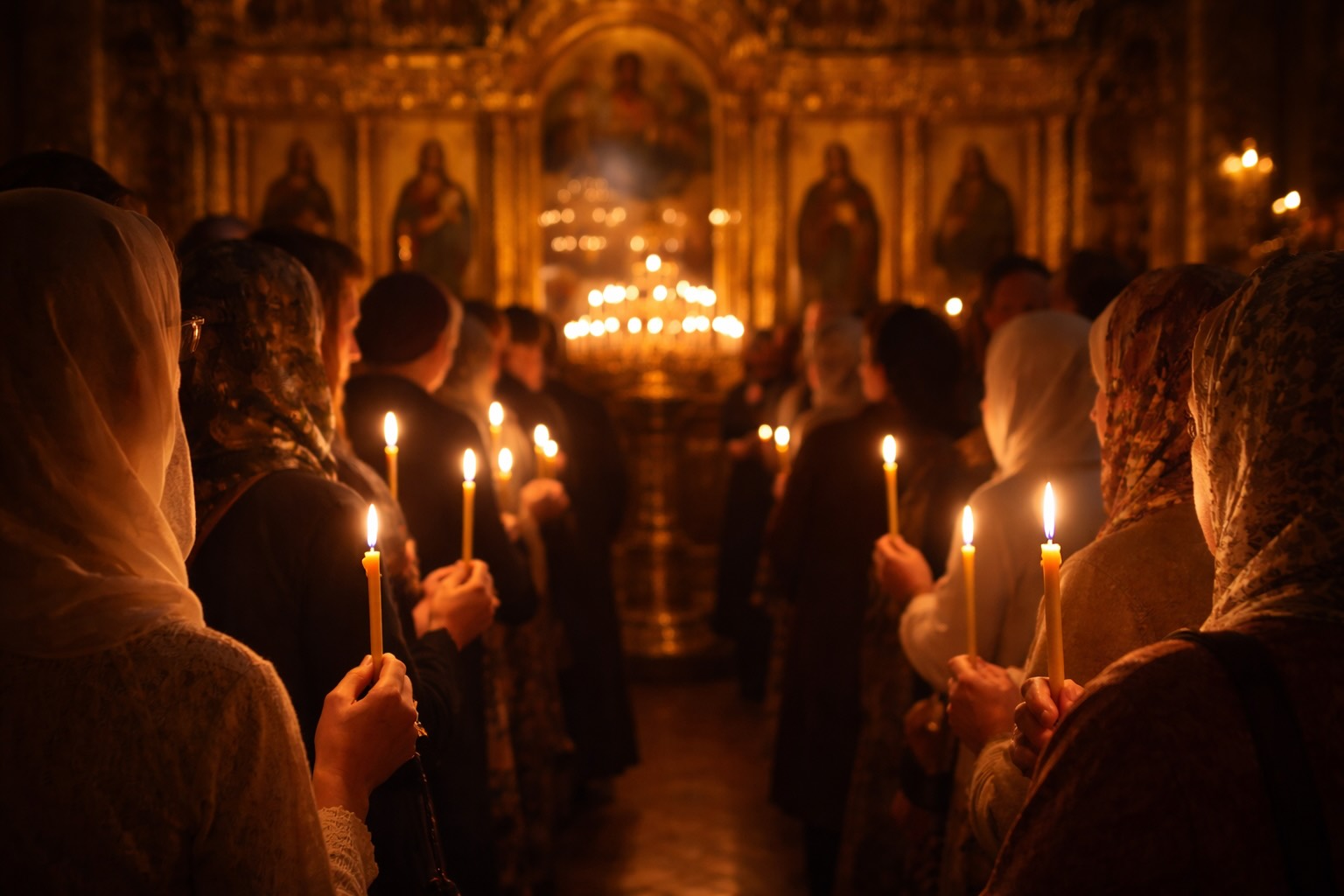
On Saturday night, churches go completely dark. Worshippers gather holding unlit candles. Just before midnight, the priest emerges from the altar carrying a single flame and chants: “Come, receive the light from the unwaning Light, and glorify Christ who is risen from the dead.”
The flame passes from candle to candle until the entire church glows. Bells ring. In many countries, fireworks explode. The priest proclaims: “Christ is risen!” The congregation responds: “Truly He is risen!”
This exchange — “Christ is risen / Truly He is risen” — continues for forty days until Ascension.
Red Eggs
Orthodox Easter eggs are traditionally dyed red, symbolising Christ’s blood and the tomb from which He emerged. Families play a game of cracking eggs against each other. The last uncracked egg represents good luck for the year.
The Paschal Feast
After midnight, families break their fast with a feast. In Greece, lamb is traditional. Russian families enjoy kulich (Easter bread) and paskha (a sweet cheese dish). Every culture has its own beloved foods reserved for this celebration.
Greeting the Dead
In some Orthodox communities, particularly Russian, families visit cemeteries on Easter to share the good news with departed loved ones. They place eggs and bread on graves, symbolically telling the dead: Christ is risen.
The Meaning of Pascha
The word “Pascha” comes from the Hebrew “Pesach” — Passover. Orthodox theology emphasises the continuity between the Jewish Passover and Christ’s resurrection. Just as God delivered Israel from slavery in Egypt, Christ delivers humanity from slavery to sin and death.
The central hymn of Orthodox Easter declares:
Christ is risen from the dead, trampling down death by death, and to those in the tombs granting life.
This isn’t mere poetry. Orthodox Christians believe the resurrection fundamentally changed reality. Death itself was defeated. The tomb became a doorway rather than a dead end.
Higher Praise celebrates this truth alongside our Orthodox brothers and sisters. Whatever calendar we follow, we proclaim the same risen Lord.
Can Protestants and Catholics Attend Orthodox Services?
Absolutely. Visitors are welcome at Orthodox Easter services. The liturgy is beautiful, ancient, and deeply moving — though quite different from Western worship.
A few things to know:
- Services are long. The midnight Pascha service can last several hours.
- Standing is traditional. Pews are rare in many Orthodox churches.
- Non-Orthodox visitors typically don’t receive Communion but can participate in other aspects of worship.
- The greeting “Christ is risen” will be exchanged constantly. The proper response is “Truly He is risen” or, in Greek, “Alithos Anesti.”
Many Western Christians who attend Orthodox Pascha describe it as one of the most powerful worship experiences of their lives.
One Lord, One Resurrection
The calendar difference can seem confusing, but it points to something deeper: Christians worldwide, across every tradition, proclaim the same foundational truth.
Christ died. Christ rose. Christ will come again.
Whether you celebrated last week or you’re celebrating today, the message remains unchanged. The tomb is empty. Death is defeated. Hope is alive.
To our Orthodox brothers and sisters: Christos Anesti — Christ is risen!
And to all who follow Jesus: may the reality of the resurrection transform your life today and every day.
A Prayer for Christian Unity
Lord Jesus, You prayed that Your followers would be one, just as You and the Father are one.
Today, as Christians around the world celebrate Your resurrection on different dates, we thank You that the truth remains the same. You are risen. You are Lord. You have conquered death.
Draw Your church together in love. Help us to honour one another across traditions and calendars. May our unity in the gospel shine brighter than our differences in practice.
Christ is risen! He is risen indeed!
Amen.