Thoughts and Prayers: What the Phrase Means and What the Bible Says About Prayer and Action
"Thoughts and prayers" has become a phrase people argue about. Here is where the criticism came from, what the research found, and what Scripture says about praying and doing.
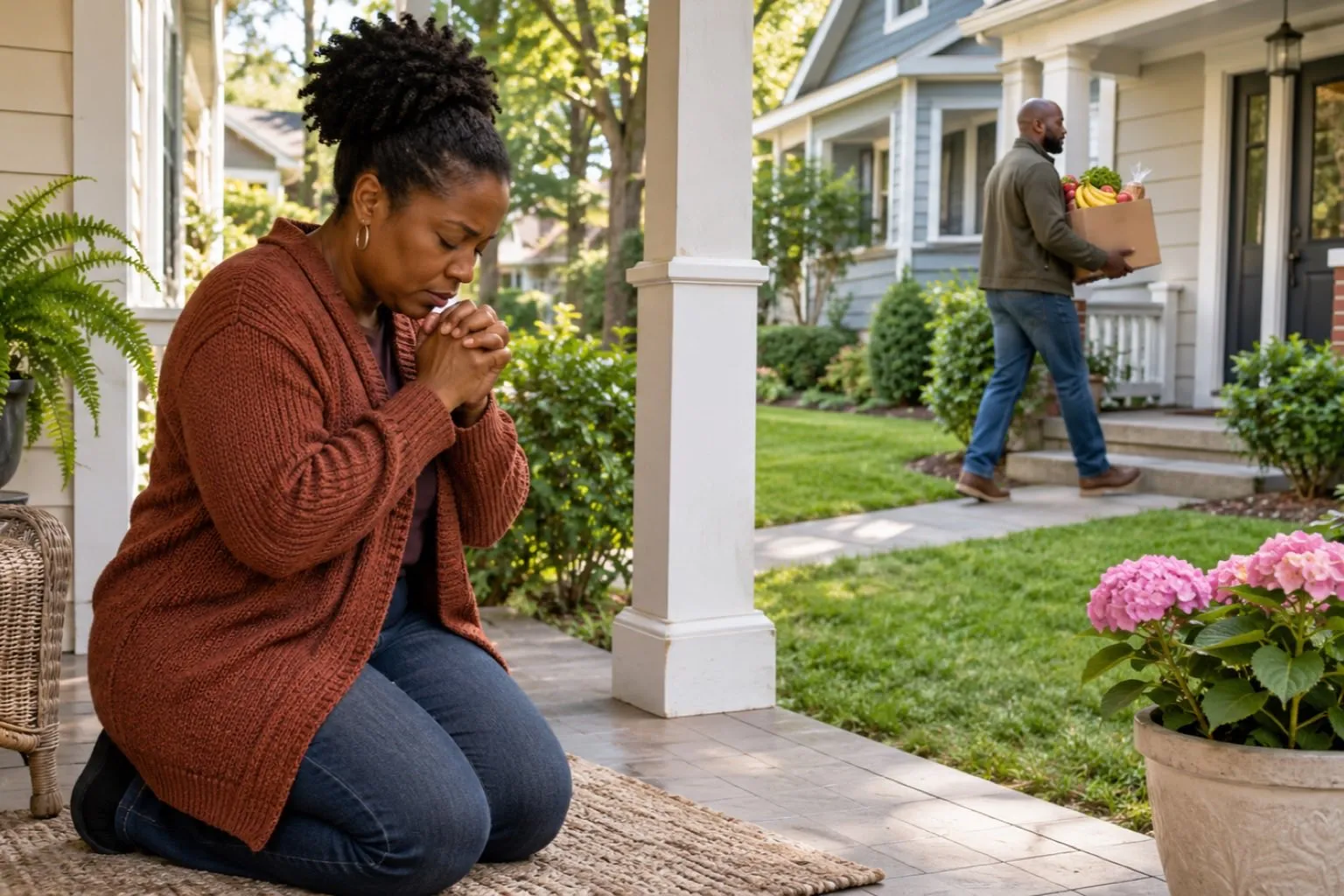
Few phrases have traveled as far, or fallen as fast, as "thoughts and prayers." It was once a simple way to tell someone you cared. Today it is as likely to be quoted with a roll of the eyes. In this article we look at what the phrase means, why so many people came to resent it, what researchers have found, and, most of all, what the Bible says about prayer and action.
The Short Answer
"Thoughts and prayers" is an expression of sympathy offered after a death, a disaster or an act of violence. The criticism of it is not really a criticism of prayer. It is a criticism of prayer offered instead of help by someone who has the power to help. On that point the Bible agrees with the critics. Scripture commands us to pray, and it also says plainly that kind words without action are worth nothing to a person in need.
Where the "Thoughts and Prayers" Backlash Came From
No one can say with confidence who first used the phrase in public life. What is well documented is when the mood turned. After the mass shooting in San Bernardino, California, in December 2015, public officials posted their thoughts and prayers as they had many times before. This time the response was angry. One New York newspaper ran a front page declaring that God was not fixing this, and the phrase became a hashtag used in mockery.
The complaint was specific. It was aimed at people in office who offered sympathy after each tragedy and then, in the eyes of their critics, did nothing else. Many Christians heard it as an attack on prayer itself, and some of it was. But the heart of the objection is one the prophets would have recognized.
What the Research Found
In 2020 an economist at the University of Wyoming, Linda Thunström, published a study in the Journal of Risk and Uncertainty with the title "Thoughts and prayers – Do they crowd out charity donations?" She ran three online experiments in which people were given a small sum and could donate some of it to the Red Cross for hurricane victims. Some participants were first asked to pray for the victims, some to think about them, and some neither.
In the main experiment, those who prayed first gave less. Those who only thought about the victims did not. The suggestion is that for some people, praying feels like having already helped.
The study deserves to be read with care, and its author was careful. The effect appeared in two of the three experiments, not all three. It disappeared when donations were limited to very small amounts. The participants were online volunteers handling a few dollars. It is a hint about human nature, not a proof that praying people are less generous. A separate study by Thunström and a colleague, published in 2019, found something else worth knowing: Christians valued being prayed for by a stranger, while atheists and agnostics would rather not be.
What should a believer take from this? Mainly a warning. It is possible to pray and then quietly cross the person off our list. Scripture has been warning about that for two thousand years.
What the Bible Says About Prayer Without Action
The clearest passage reads almost as if James had seen the hashtag.
James 2:15-17 — "And if a brother or sister is naked and in lack of daily food, and one of you tells them, “Go in peace, be warmed and filled”; and yet you didn’t give them the things the body needs, what good is it? Even so faith, if it has no works, is dead in itself."
"Go in peace, be warmed and filled" is a blessing. It is a kind thought, even a kind of prayer. James says that if it is all we offer to someone we could have fed, it is no good at all.
The apostle John makes the same point.
1 John 3:17-18 — "But whoever has the world’s goods, and sees his brother in need, and closes his heart of compassion against him, how does the love of God remain in him? My little children, let’s not love in word only, neither with the tongue only, but in deed and truth."
And long before either of them, God spoke through Isaiah to people who were praying a great deal while ignoring injustice.
Isaiah 1:15-17 — "When you spread out your hands, I will hide my eyes from you. Yes, when you make many prayers, I will not hear. Your hands are full of blood. Wash yourselves, make yourself clean. Put away the evil of your doings from before my eyes. Cease to do evil. Learn to do well. Seek justice. Relieve the oppressed. Judge the fatherless. Plead for the widow."
That is a hard word. God says there are prayers he will not hear, because the hands lifted to him have not been used to do right. He goes on, later in the same book, to describe the kind of devotion he does want.
Isaiah 58:6-7 — "Isn’t this the fast that I have chosen: to release the bonds of wickedness, to undo the bands of the yoke, and to let the oppressed go free, and that you break every yoke? Isn’t it to distribute your bread to the hungry, and that you bring the poor who are cast out to your house? When you see the naked, that you cover him; and that you not hide yourself from your own flesh?"
We write more about that passage in our guide to fasting in the Bible.
What the Bible Says About the Power of Prayer
None of this means prayer is empty. The same James who demands action also says this.
James 5:16 — "Confess your offenses to one another, and pray for one another, that you may be healed. The insistent prayer of a righteous person is powerfully effective."
Prayer is not a way of feeling better about a problem. It is asking the living God to act, and Scripture says he does. The mistake is not praying. The mistake is treating prayer as the end of our responsibility when it ought to be the beginning.
Nehemiah: The Pattern of Praying and Doing
The best picture of the two together is Nehemiah. He was a servant in the Persian court when he heard that Jerusalem lay in ruins.
Nehemiah 1:4 — "When I heard these words, I sat down and wept, and mourned certain days; and I fasted and prayed before the God of heaven."
He prayed for days. Then, when the king asked what was wrong, he prayed again in the space of a breath and asked for exactly what was needed.
Nehemiah 2:4-5 — "Then the king said to me, “For what do you make request?” So I prayed to the God of heaven. I said to the king, “If it pleases the king, and if your servant has found favor in your sight, that you would send me to Judah, to the city of my fathers’ tombs, that I may build it.”"
Nehemiah prayed, and then he asked for leave, letters, timber and an escort, and went and rebuilt the wall. His thoughts and prayers came with a plan.
How to Offer Thoughts and Prayers That Mean Something
- Actually pray. If you say you will pray for someone, stop and do it, then and there if you can. Out loud, with them, is better still.
- Ask what would help. Then do one concrete thing: a meal, a lift, a bill paid, an afternoon of childcare.
- Be present. Often the most useful thing is simply to show up and stay.
Romans 12:15 — "Rejoice with those who rejoice. Weep with those who weep."
- Carry part of the load.
Galatians 6:2 — "Bear one another’s burdens, and so fulfill the law of Christ."
- Use the influence you have. If you are in a position to change what caused the harm, sympathy is not the whole of your duty.
- Be thoughtful about your words. With a grieving friend who does not share your faith, "I am so sorry, and I am here" may be received better, and you can still pray for them in private.
- Follow up. Grief lasts longer than the first week. A message a month later says more than a comment on the day.
Jesus described the people he will welcome at the end in exactly these terms.
Matthew 25:35-36 — "for I was hungry, and you gave me food to eat. I was thirsty, and you gave me drink. I was a stranger, and you took me in. I was naked, and you clothed me. I was sick, and you visited me. I was in prison, and you came to me."
For those walking through trouble themselves, we have gathered Bible verses about praising God in hard times.
Conclusion
"Thoughts and prayers" became a bitter phrase because people heard it used as a way of doing nothing. The answer is not to stop praying. It is to pray the way Scripture describes: earnestly, expecting God to act, and ready to be part of his answer. Pray like Nehemiah, and then pick up a stone and start on the wall.