

Few questions stir more controversy among believers than this: do Christians and Muslims worship the same God? Pope Leo XIV’s recent visit to the Grand Mosque of Algiers has reignited this centuries-old debate, with the pontiff calling the mosque “a divine and sacred space” and urging Christians to be “less fearful of Islam.”
For Christians seeking biblical clarity, the answer requires careful examination of Scripture rather than political correctness or interfaith diplomacy. At Higher Praise, we believe God’s Word provides the framework for understanding this complex question.
The Case for “Yes” — Common Ground
Those who argue Christians and Muslims worship the same God point to several similarities. Both faiths trace their spiritual lineage to Abraham. Both affirm that God is one, eternal, all-powerful, and the Creator of all things. Both reject idolatry and polytheism.
The Arabic word “Allah” itself simply means “God” — Arabic-speaking Christians have used this term in their Bible translations for centuries. When Muslim scholars describe God as the uncaused First Cause who is omniscient and omnipresent, these attributes align with Christian theology.
Furthermore, the Quran references biblical figures including Abraham, Moses, and Jesus. Muslims revere Jesus as a prophet born of a virgin, and they honour Mary more than many Protestant traditions do. This shared heritage is why Islam, Christianity, and Judaism are often grouped together as “Abrahamic faiths.”
The Case for “No” — Irreconcilable Differences
However, the similarities obscure fundamental differences that cannot be reconciled. Christian theologian Andy Bannister, who holds a PhD in Islamic Studies, identifies three attributes of God that saturate the Bible but are absent from the Quran: God is relational, knowable, and loving.
The biblical God reveals Himself personally. At the burning bush, He told Moses His name — Yahweh — an intimate act of self-disclosure (Exodus 3:14). Jesus said, “Anyone who has seen me has seen the Father” (John 14:9). The Christian faith rests on the astounding claim that God became flesh and dwelt among us (John 1:14).
In contrast, Islamic scholar Isma’il al-Faruqi wrote that in Islam, “Allah does not reveal himself to anyone in any way. God reveals only His will.” Muslims can know Allah’s commands, but they cannot know Allah himself — he remains utterly transcendent and removed.
The Trinity — The Essential Divide
The most significant difference centres on the Trinity. Christians believe God exists eternally as three Persons: Father, Son, and Holy Spirit — one God in three Persons, not three gods. This doctrine is not optional; it defines who God is.
Islam categorically denies the Trinity. The Quran states: “Do not say ‘Trinity’… Allah is but one God” (Surah 4:171). It also denies that Jesus is God’s Son: “It is not befitting for Allah to take a son” (Surah 19:35).
Reformed theologian R.C. Sproul put it plainly: “You cannot separate the doctrine of the Trinity from your definition of God. God is Father, Son, and Holy Spirit. Does Islam worship Christ as God? The answer is no. So the answer is no, we don’t worship the same God.”
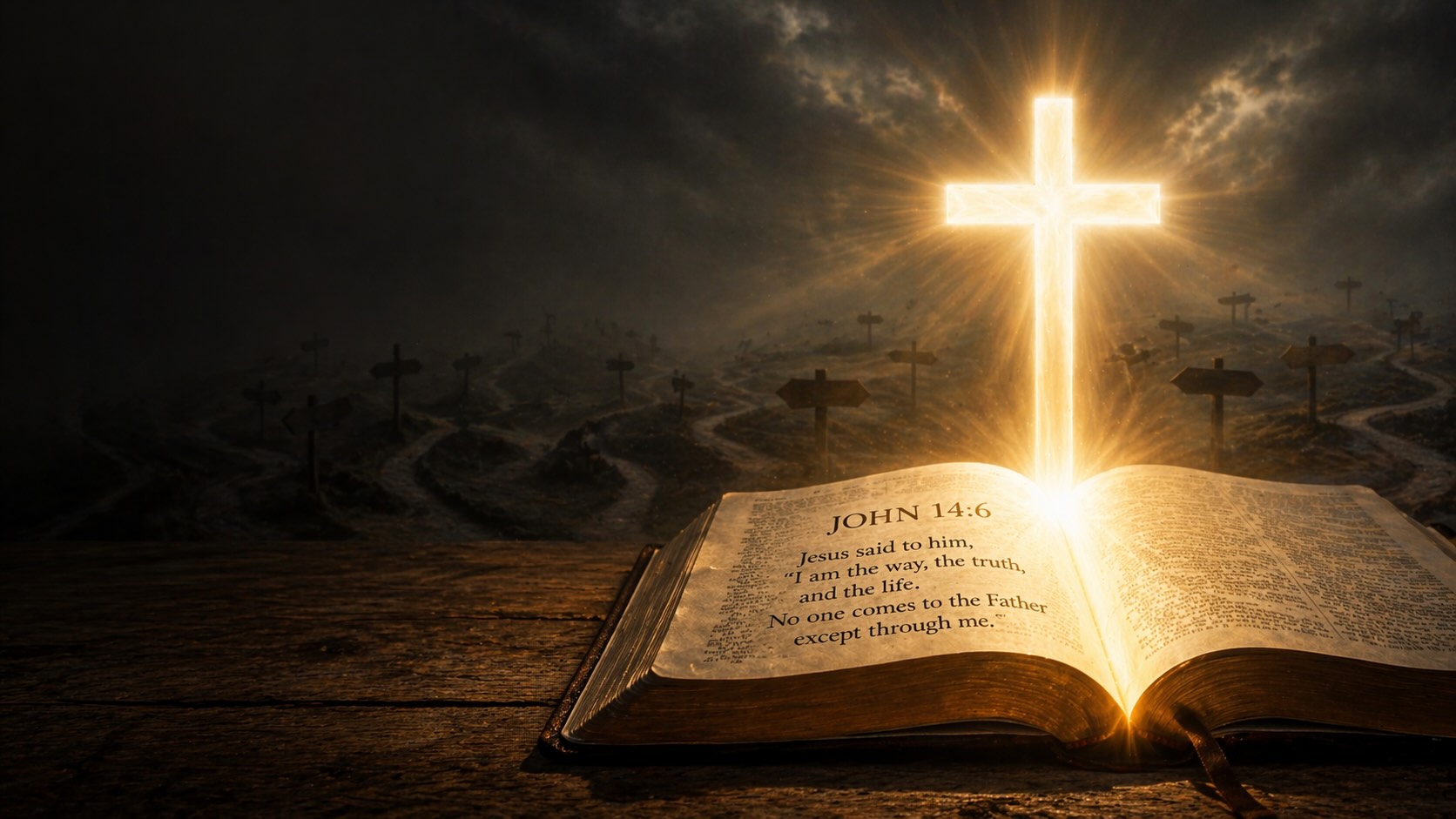
Scripture itself addresses this question directly. Jesus declared, “I am the way and the truth and the life. No one comes to the Father except through me” (John 14:6). This is not arrogance — it is the exclusive claim at the heart of Christianity.
The apostle John wrote even more explicitly: “Who is the liar? It is whoever denies that Jesus is the Christ. Such a person is the antichrist — denying the Father and the Son. No one who denies the Son has the Father; whoever acknowledges the Son has the Father also” (1 John 2:22-23).
Paul warned the Corinthians about those who preach “a Jesus other than the Jesus we preached” or “a different gospel” (2 Corinthians 11:4). Since Islam teaches that Jesus was merely a prophet who did not die on the cross and was not raised from the dead, it presents precisely this — a different Jesus.
The Question Reframed
Perhaps the better question is not whether Muslims and Christians worship the same God, but whether God accepts the worship of both Muslims and Christians. The Bible is clear that acceptable worship comes only through Jesus Christ. Jesus told the Samaritan woman, “A time is coming and has now come when the true worshippers will worship the Father in the Spirit and in truth, for they are the kind of worshippers the Father seeks” (John 4:23).
At Higher Praise, we affirm that God loves every person He has created, including our Muslim neighbours. Jesus died for the whole world (John 3:16). Many Muslims sincerely seek God — and that seeking is commendable. As Bannister notes, many Muslims describe longing for a God who is relational, knowable, and loving. They are describing the God of the Bible, not the God of the Quran.
Loving Muslims While Speaking Truth
How then should Christians respond to Pope Leo’s call to be “less fearful of Islam”?
We should not fear Muslims as people. Jesus commands us to love our neighbours, including those who believe differently (Matthew 22:39). Fear is not the Christian posture. However, loving Muslims does not mean accepting Islam as an equally valid path to God. True love tells the truth — and the truth is that salvation comes through Jesus Christ alone (Acts 4:12).
The Higher Praise community believes in building bridges of genuine friendship with people of all faiths while never compromising the gospel. We can respect Muslims, learn from their devotion, and engage in meaningful dialogue — all while holding firmly to the biblical truth that Jesus Christ is Lord.
Conclusion
Do Christians and Muslims worship the same God? Based on Scripture, the answer is no. While both faiths affirm monotheism and share some common beliefs, the God revealed in the Bible is fundamentally different from the God described in the Quran. The biblical God is Triune, relational, knowable, and ultimately revealed in Jesus Christ — truths that Islam explicitly denies.
This is not cause for hostility but for compassion. Millions of Muslims are earnestly seeking the God who loves them. Our calling is to share the good news that this God has made Himself known — not through a distant revelation, but through a Person. His name is Jesus.
FAQ — People Also Ask
What is the difference between Christianity and Islam? Christianity teaches that God is Triune (Father, Son, and Holy Spirit), that Jesus is God incarnate who died for humanity’s sins and rose again, and that salvation comes through faith in Christ alone. Islam teaches that God is a singular person (Allah), that Jesus was only a prophet, and that salvation comes through submission to Allah and good works. These differences are fundamental and irreconcilable.
Is Allah the same as God? “Allah” is simply the Arabic word for God and is used by Arabic-speaking Christians in their Bible translations. However, the character and nature of Allah as described in the Quran differs significantly from the God revealed in the Bible. The biblical God is Triune and relational; the Quranic God is singular and unknowable. Same word, different being.
Do Jews and Christians worship the same God? This is a more complex question. Jews worship Yahweh, the God of Abraham, Isaac, and Jacob — the same God Christians worship. However, Judaism rejects Jesus as the Messiah and does not affirm the Trinity. Christians believe that to fully know the Father, one must know the Son (John 14:7). While the object of worship is the same God, the fullness of revelation differs.
What does the Bible say about Islam? The Bible was completed centuries before Islam emerged in the 7th century, so it does not mention Islam directly. However, Scripture warns about false prophets (Matthew 7:15), false gospels (Galatians 1:8), and those who deny that Jesus is the Son of God (1 John 2:22-23). These warnings apply to any teaching that contradicts the biblical gospel.
Can Christians pray in a mosque? Christians are not forbidden from entering a mosque, and respectful visits can build bridges of understanding. However, participating in Islamic prayers or rituals that deny Christ’s deity would compromise Christian conviction. When Pope Leo XIV prayed silently facing the qibla (direction of Mecca) in the Grand Mosque of Algiers, many Christians questioned whether this crossed a theological line.
Are Christianity and Islam the same? No. While both are monotheistic and share some biblical figures, their core teachings differ fundamentally on who God is, who Jesus is, how salvation is achieved, and the authority of Scripture. These are not minor disagreements but essential doctrines that define each faith.
Why do some say Christians and Muslims worship the same God? Some emphasise the shared Abrahamic heritage and overlapping attributes (Creator, Judge, Sovereign). The Second Vatican Council stated that Muslims “acknowledge the Creator” and are included in God’s plan of salvation. However, many Protestants and some Catholics argue this view minimises the essential differences, particularly regarding the Trinity and the deity of Christ.