O Come, All Ye Faithful: Lyrics, History and Meaning of the Carol
O Come, All Ye Faithful began as the Latin hymn Adeste Fideles in the 1740s. Read the full lyrics, who wrote it, and the Scripture and creed behind each verse.
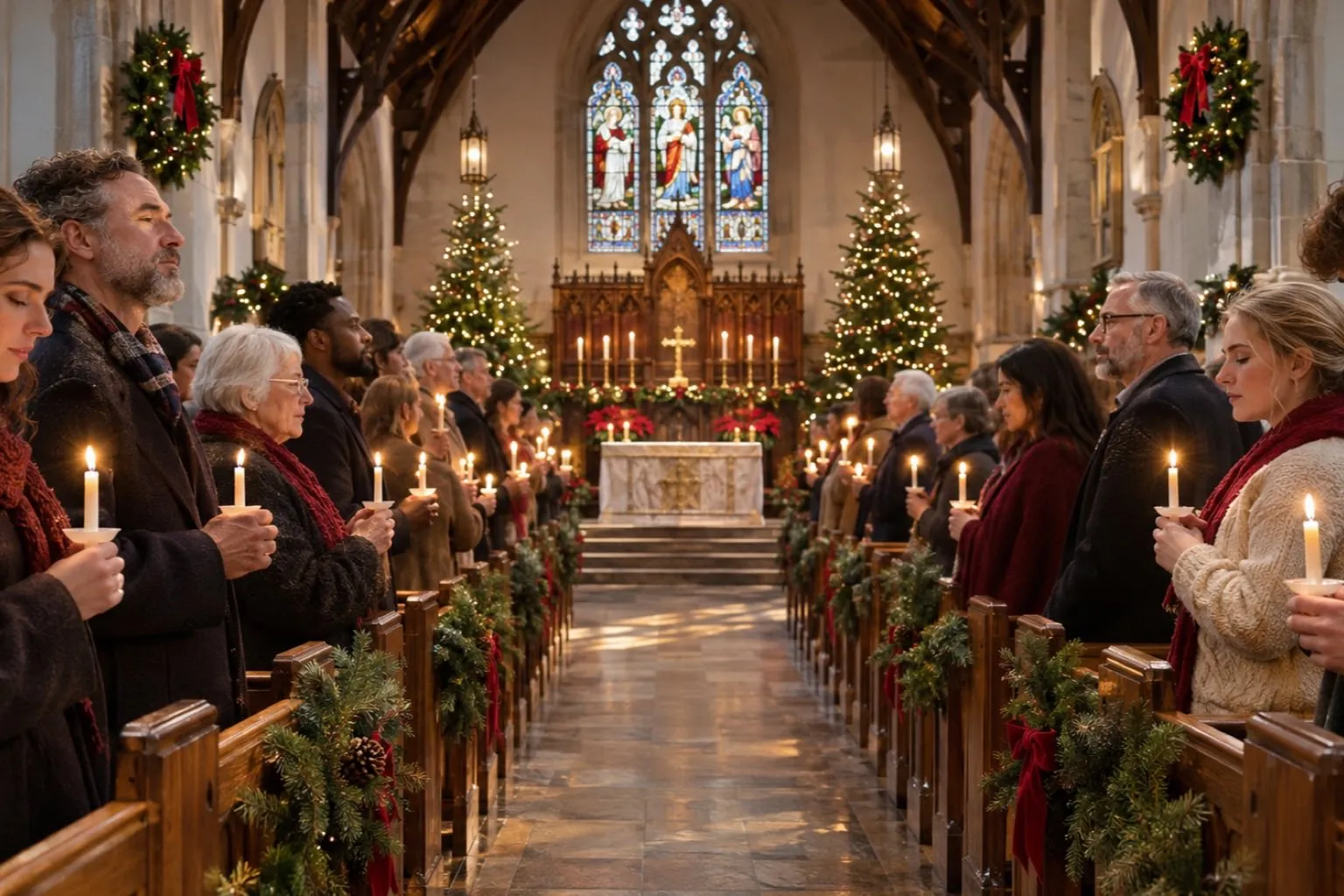
O Come, All Ye Faithful is one of the few Christmas carols that is also a creed. It calls believers to Bethlehem, tells them exactly who lies in the manger, and then asks for one response: come and adore him. Here are the lyrics, the history of the carol and the meaning of each verse.
The Short Answer
O Come, All Ye Faithful is the English form of the Latin hymn Adeste Fideles. The earliest signed manuscripts are by John Francis Wade, an English Catholic layman, and date from the 1740s. The English translation is by Frederick Oakeley, made around 1841 and revised in 1852. The carol is in the public domain.
O Come, All Ye Faithful Lyrics
O come, all ye faithful, joyful and triumphant,
O come ye, O come ye to Bethlehem!
Come, and behold Him, born the King of angels!
Refrain:
O come, let us adore Him;
O come, let us adore Him;
O come, let us adore Him, Christ, the Lord!
God of God, Light of Light,
Lo, He abhors not the virgin's womb;
Very God, begotten not created;
Sing, choirs of angels; sing in exultation;
Sing, all ye citizens of heav'n above!
Glory to God, all glory in the highest!
Yea, Lord, we greet Thee, born this happy morning;
Jesus, to Thee be all glory giv'n!
Word of the Father, now in flesh appearing!
Who Wrote O Come, All Ye Faithful?
For a long time no one was sure. The carol was once credited to an English organist named John Reading, and it was nicknamed the "Portuguese Hymn" because it was sung at the Portuguese embassy chapel in London. Neither is its origin. The evidence that survives is a set of manuscripts signed by John Francis Wade, who made his living copying and selling church music, the earliest dated to 1743.
Wade wrote four Latin stanzas. Others were added later. The English words came a century on, when Frederick Oakeley translated the hymn for his congregation at Margaret Chapel in London. His first line was different. The opening we know, "O come, all ye faithful," comes from a hymnal of 1852.
You may read that the carol was a coded rallying song for supporters of Bonnie Prince Charlie. Wade did sympathize with that cause, and one scholar has argued the case, but it is a theory and not an established fact.
What the Verses Mean
The second verse is the heart of the carol, and it is taken almost word for word from the Nicene Creed: "God of God, Light of Light ... begotten, not created." The child in Bethlehem is not a messenger from God. He is God.
The third verse joins the song of the angels over the shepherds' field.
Luke 2:13-14 — "Suddenly, there was with the angel a multitude of the heavenly army praising God, and saying, “Glory to God in the highest, on earth peace, good will toward men.”"
The last verse, "Word of the Father, now in flesh appearing," is John's account of Christmas in a single line.
John 1:14 — "The Word became flesh, and lived among us. We saw his glory, such glory as of the one and only Son of the Father, full of grace and truth."
Using O Come, All Ye Faithful in Worship
It is the natural opening hymn for Christmas Eve or Christmas morning, since its first word is an invitation. Many churches save the last verse, "born this happy morning," for Christmas Day itself. For the rest of the season, see our page on the Star of Bethlehem and our call to worship scriptures.
For more, see our worship songs section, the story of Amazing Grace, and our list of worship songs for difficult times.
Conclusion
O Come, All Ye Faithful has been sung in Latin and in English for nearly three hundred years because it does two things at once. It tells the truth about who Jesus is, and it tells us what to do about it. Come, and adore him.